

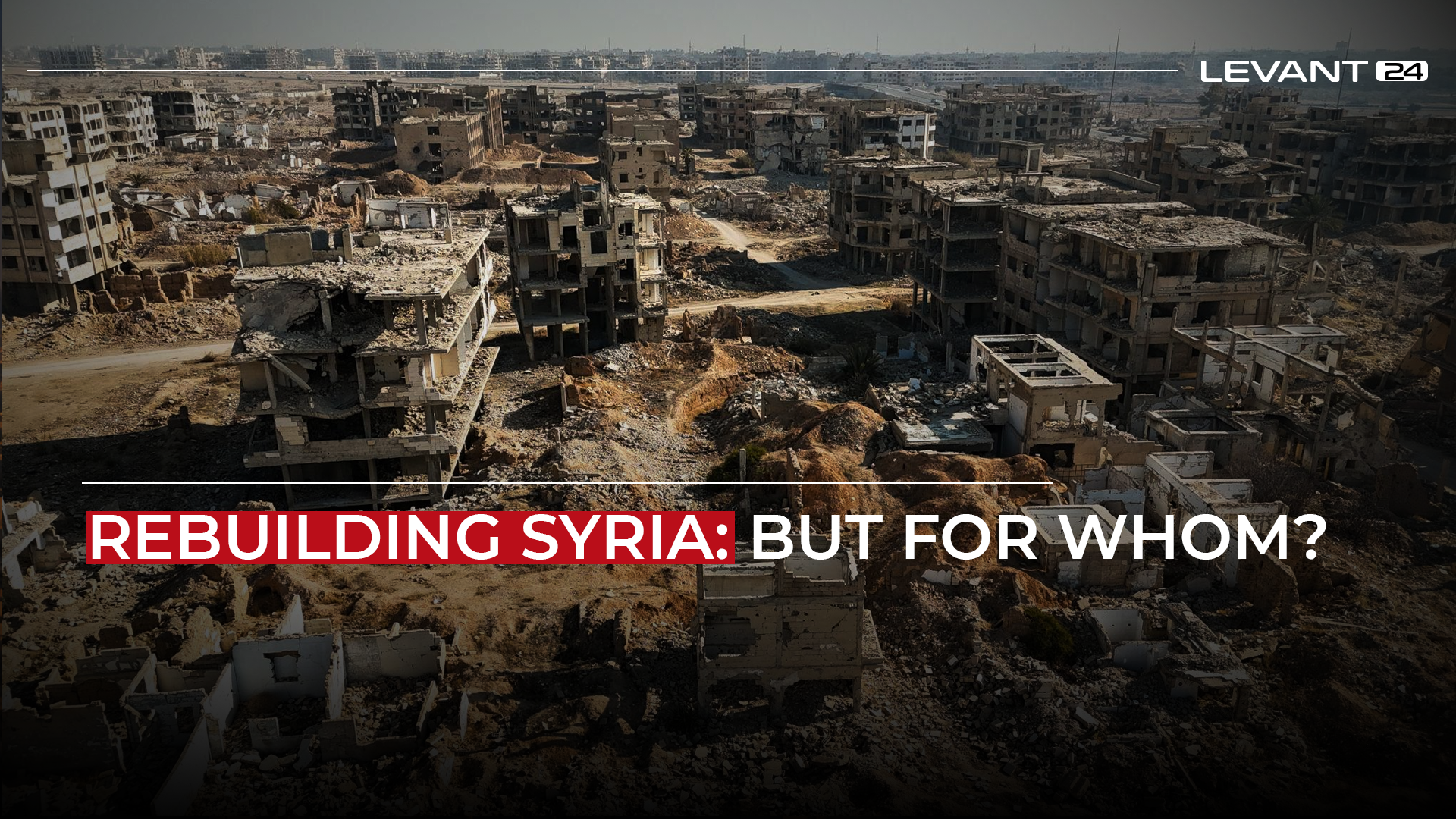
Eighteen-year-old Suleiman spends his days working in Jobar,
the Damascus neighborhood where his family once lived, before making a commute
of nearly three hours each day back to their rented home in Qudsaya. Rising
rents have stretched his family’s finances, yet returning home remains out of
reach. “People are tired of the rent hikes, want a solution, and are demanding
reconstruction,” Suleiman told Levant24.
“We’re asking the government to allow us to repair our homes. All we want is
for electricity to be connected to us.” His frustration encapsulates a
challenge confronting post-war Syria: reconstruction is no longer simply about
rebuilding neighborhoods reduced to rubble. It is increasingly about deciding
who returns, who benefits from investment, and whether redevelopment will heal
the wounds of the past or deepen them.
Among the legal tools the Assad regime used against Syrians
were Legislative Decree No. 66 (2012) and Law No. 10 (2018), two laws that drew
widespread criticism. Together, they allowed Assad to demolish “informal housing”
and redevelop urban areas into “modern zones,” permitting the regime to
appropriate real estate in return for “shares” in new developments.
As foreign investors announce major projects and government
officials promote reconstruction as the foundation of Syria’s recovery, many
displaced Syrians remain anxious that redevelopment could echo such old
laws, including opaque planning, weak property protections and projects
favoring investors over residents. At the same time, officials insist
reconstruction is being approached differently, with safeguards designed to
protect ownership rights while encouraging displaced families to return.
Investment: Precursor to Recovery
The scale of Syria’s reconstruction challenge is immense. Estimates cited by international institutions place rebuilding costs at as much as $400 billion, far beyond the state’s current financial capacity. That reality makes private investment a central pillar of reconstruction efforts.
“Mustafa,” a Syrian businessman, speaking anonymously to Levant24 because of ongoing business negotiations, who returned from Kuwait to build schools and infrastructure projects, argued early investment inevitably favors wealthier segments of society while remaining a necessary precursor to restart the economy.
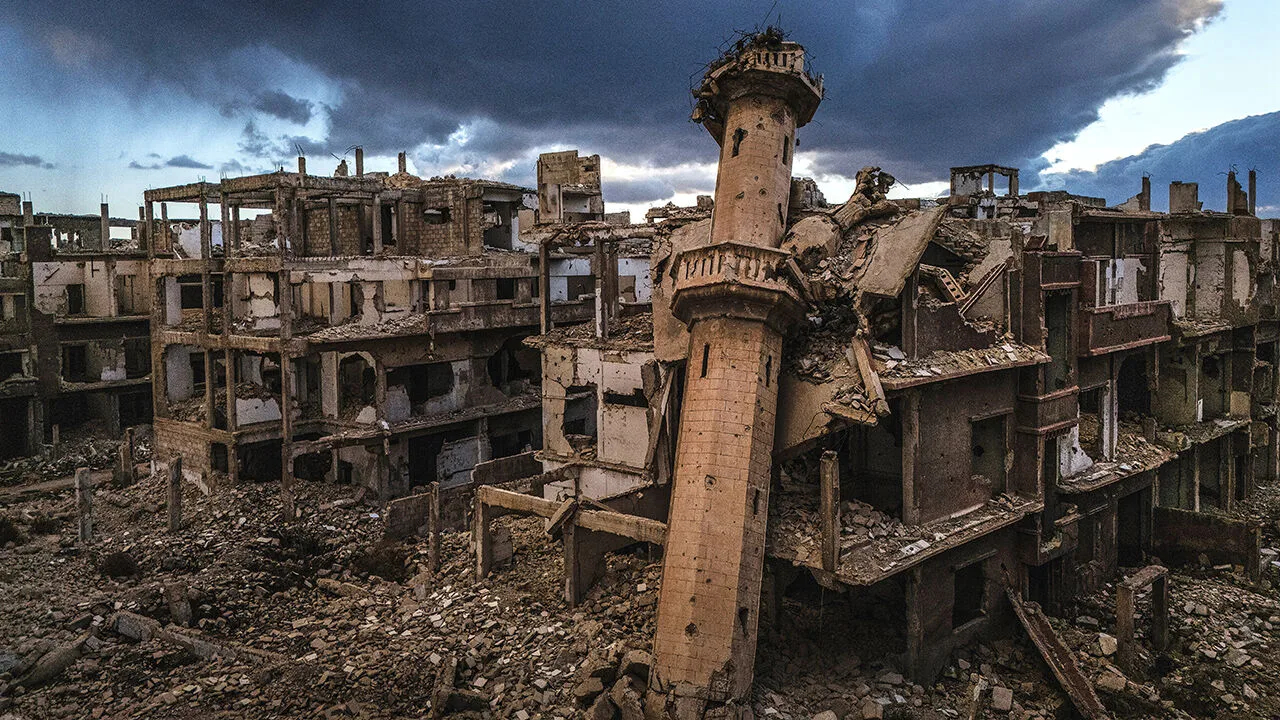
Jobar, a suburb of Damascus lays in ruins until today. One of the hardest hit areas in the capital's vicinity. (David Guttenfelder/New York Times)
“The first investment phase is for the affluent, who don’t exceed around seven percent of society,” he said. “This is a necessary phase to stimulate the job market and revive the foreign exchange market.” He nevertheless acknowledged outdated legislation and government institutions staffed by employees accustomed to Assad-era regulatory systems require modernization.
Muhammad Maqali, a Syrian representative of the Turkish infrastructure company SMS, described reconstruction as an opportunity to rebuild critical services rather than only luxury developments. Syria’s damaged drinking water networks require extensive rehabilitation. “The biggest beneficiary is the Syrian state, its government and (Syrians),” Maqali told Levant24. “We’re reducing the reconstruction bill as much as possible.”
Fears of Past Sins
For many displaced Syrians, however, investment alone does not answer the most important question: will they be able to return to their homes, and will their property rights remain intact? Residents of heavily damaged neighborhoods such as Jobar and Qaboun expressed growing concerns over redevelopment proposals circulating online, including rumors of land redistribution and reduced property allocations.
Suleiman said social media speculation fuels fears that homeowners could lose portions of their land or be relocated elsewhere within redevelopment zones. Anas al-Bakri, spokesperson for the Board of Trustees representing Jobar and Qaboun, said residents recognize the government’s financial limitations after years of war but remain determined to protect their rights.
“We urgently need an in-depth study of a fair regulatory plan ensuring the return of residents to their original areas and preventing any demographic change,” he told Levant24. Such a plan, he argued, should provide “fair and equivalent compensation,” while prioritizing infrastructure, rubble removal and government-backed financial assistance for returning homeowners.
Bakri said proposals from large developers face widespread rejection because many residents believe the compensation offered falls well below the value of their homes and land. Complex legal classifications, overlapping land records and differing property designations have further complicated negotiations between investors and residents.
Attorney Abdurahman Abdullah told Levant24 protests across Damascus stem from several grievances. Some involve redevelopment plans associated with Assad-era planning decrees, while others reflect longstanding expropriations carried out under the Assad regime. In neighborhoods such as Jobar and Qaboun, he said, many residents remain unable to return despite the regime’s fall.
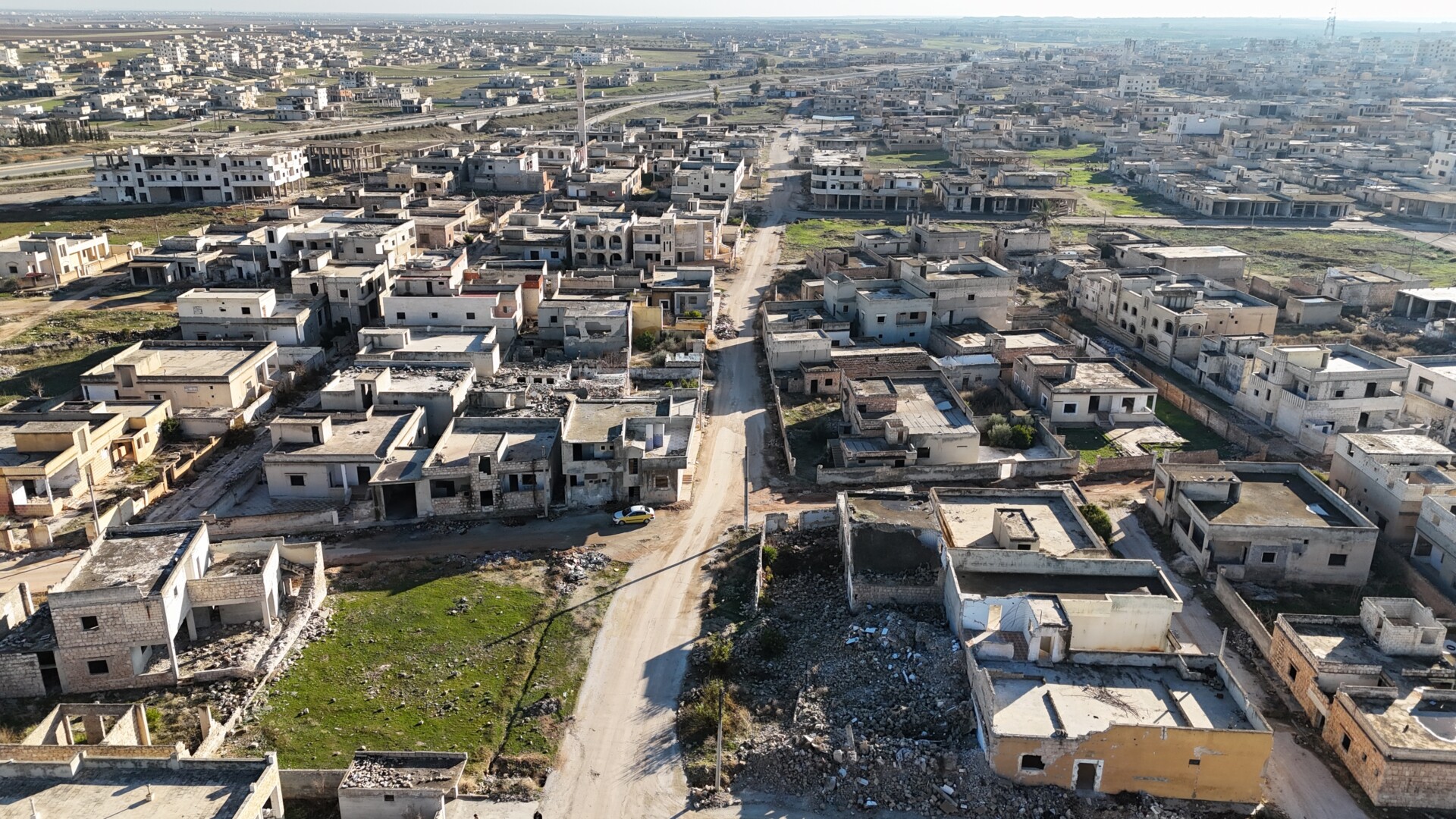
Destroyed homes in Damascus. Dec. 30, 2024. (Kasiim Rammah/Anadolu)
Ownership documentation presents another obstacle. Abdullah explained many Syrians purchased property through informal contracts or irrevocable powers of attorney whose records were later destroyed during the revolution. As a result, many displaced owners now have to prove ownership through the courts before rebuilding can begin.
Promises of Change
Government officials reject comparisons between current reconstruction efforts and policies associated with Assad. Mahmoud Hilal, Director of Planning and Urban Development in Damascus Governorate, described reconstruction as “a national file par excellence,” placing the return of displaced Syrians “with dignity” at the center of planning.
Hilal said dedicated property documentation centers have
already opened in Jobar, with support
from the German development agency GIZ, while cooperation with UN-Habitat
is underway to document ownership in Qaboun.
Broad committees involving urban planners, judicial authorities and community
representatives, he said, are intended to ensure transparency and protect
ownership rights. He also dismissed widespread social media claims about
property losses as “misinformation,” saying no regulatory decisions are
finalized without community consultation.
Ali al-Hamad, Director of Public Relations at the Ministry of Local Administration and Environment (MLAE), acknowledged public concerns are understandable after years of conflict. “Yes, we recognize concerns expressed by some citizens have realistic grounds that cannot be ignored,” he told Levant24. He said the government adopted “precautionary measures” to protect private property and distinguish its policies from practices associated with the Assad regime.
MLAE Minister Muhammad Anjarani, likewise emphasized that reconstruction extends beyond buildings. “The most important aspect is the reconstruction of the human being,” he told Levant24. “We’re trying to be extremely cautious not to inadvertently reproduce the mistakes of the former regime.”
Beyond Rebuilding Alone
International researchers increasingly argue reconstruction
cannot succeed if physical rebuilding outpaces the return of displaced
communities. A report by
the Migration Policy Institute warns rushed, uncoordinated returns could
overwhelm fragile communities and undermine long-term reconstruction.
Instead, the report recommends phased return strategies linked to rebuilding
infrastructure, restoring livelihoods and protecting legal rights. Other
analysts have similarly argued reconstruction must incorporate local
communities into planning rather than treating them as passive beneficiaries.
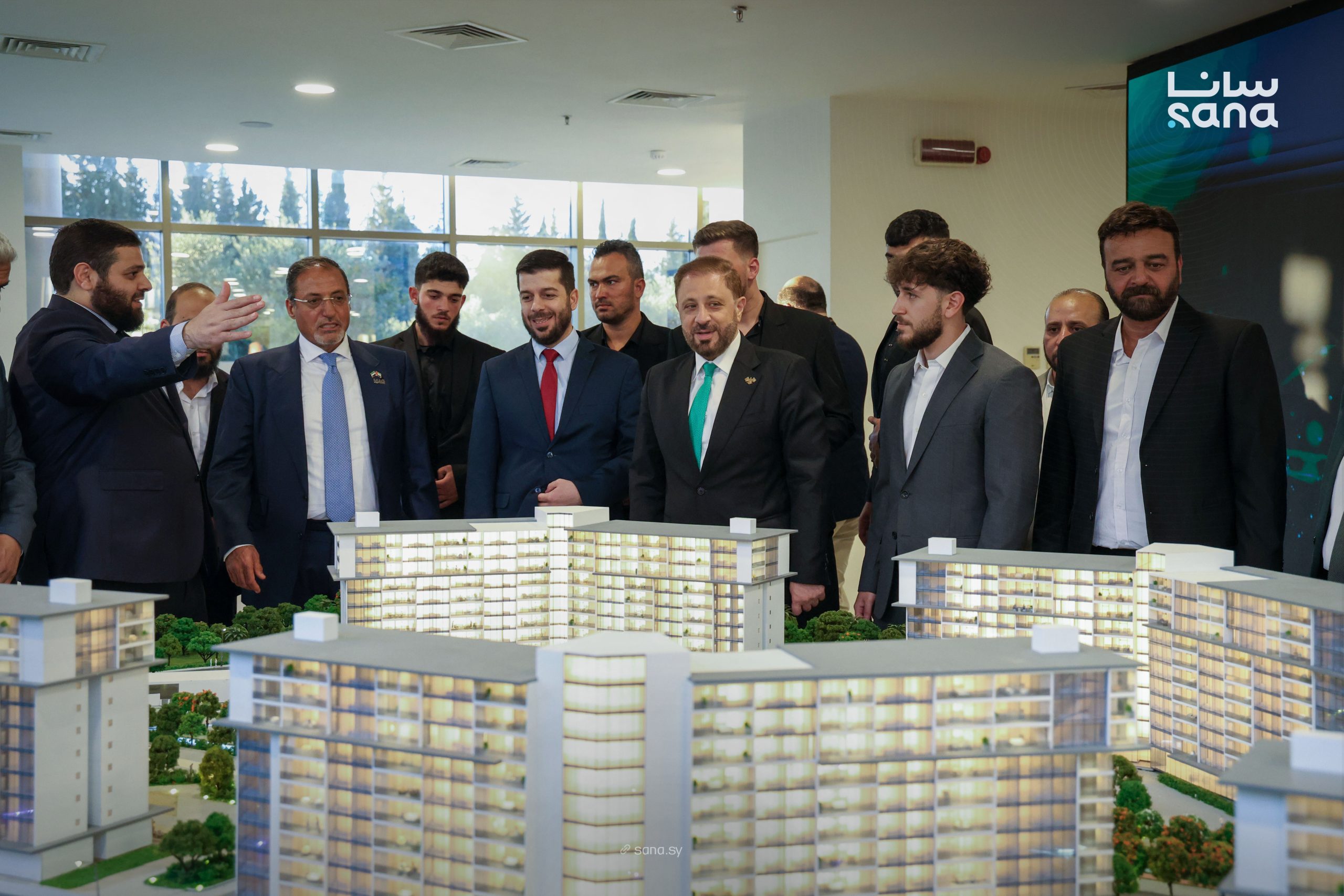
Foreign investment group launched Yafour 963, a 144,000-square-meter residential complex in the Yafour area of Rural Damascus. (SANA)
A study by the Atlantic Council contends Syria’s greatest reconstruction asset is not foreign capital but its civil society, arguing local organizations, educators and community leaders possess the knowledge needed to rebuild neighborhoods in ways reflecting residents’ needs.
Debates increasingly center on questions of land, housing and political legitimacy. Some analysts warn opaque investment agreements and redevelopment projects risk benefiting political allies and foreign investors if implemented without transparent consultation or legal reforms. The government emphasized that the current reconstruction framework fundamentally differs from Assad regime policies.
For families like Suleiman’s, however, sprawling policy debates ultimately return to a simpler question. If reconstruction succeeds only in attracting investment, its benefits may be felt unevenly, with developers, businesses and the state benefiting more quickly than many displaced families. But if it also enables displaced Syrians to reclaim their homes and livelihoods, the dividends will extend far beyond the economy.