

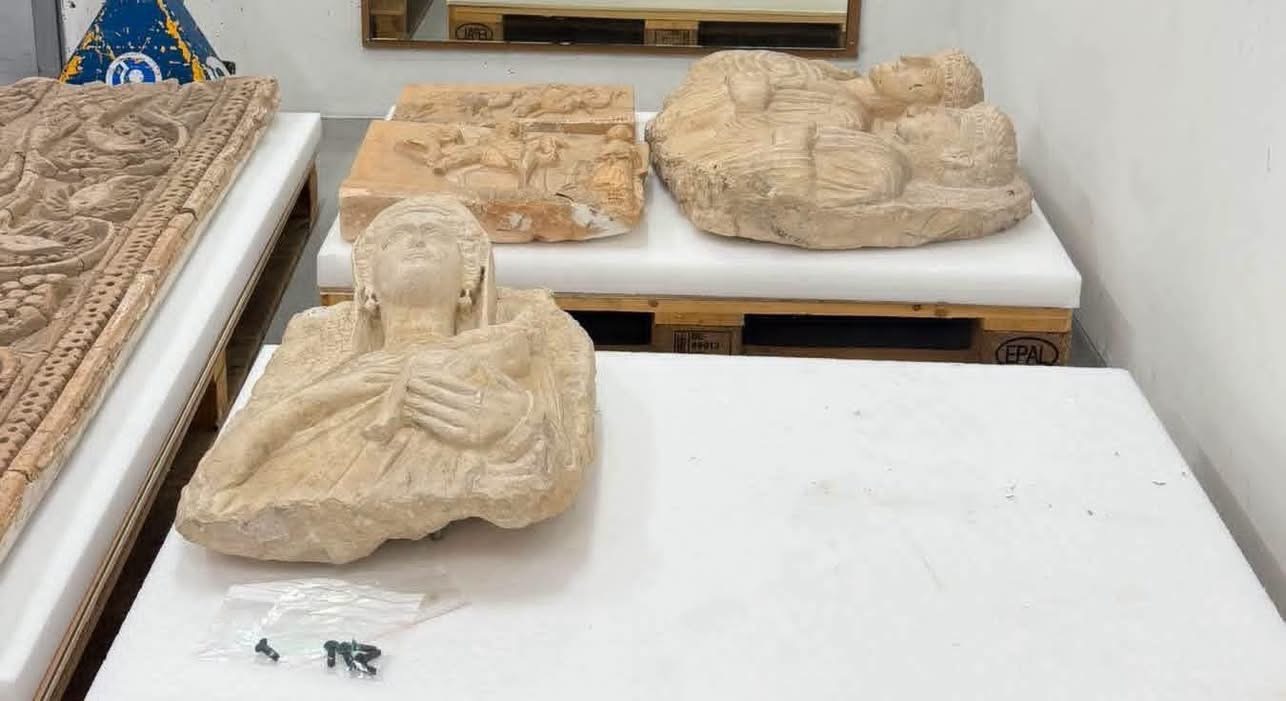
French President Emmanuel Macron is set to return 23 Syrian
archaeological artifacts to Damascus. The pieces were originally
loaned to France in 2010 but remained there after Syria’s uprising
erupted the following year. The artifacts were sent to Paris for a
temporary exhibition at the Arab World Institute.
However,
the outbreak of the Syrian revolution in 2011 prevented their return
for over a decade. According to France’s presidential office, as
reported by AFP, Macron will personally bring the artifacts with him
during his current visit to Syria. The presidency said the collection
had been loaned to the institute in 2010 but, “for obvious
reasons,” could not be repatriated during the years of conflict.
A source from Syria’s Ministry of Culture and the General Directorate of Antiquities and Museums confirmed to AFP that the collection spans multiple historical periods. The artifacts include pieces dating from the 10th millennium B.C. through the Bronze Age, the classical era, and the Arab-Islamic civilization, reflecting the breadth of Syria’s cultural heritage.
Widespread Looting During the Conflict
The return comes
against a backdrop of extensive cultural loss. According
to a 2020 report by the Gerda Henkel Foundation and the Syrian
Association for the Preservation of Antiquities, over 40,000
artifacts have been stolen from Syrian museums and archaeological
sites since the conflict began. The security vacuum created by the
war enabled trafficking networks to flourish, fueled by the growing
black market for antiquities.
Reports from international
media outlets and monitoring organizations implicated officials from
the former Assad regime and affiliated networks in facilitating the
looting, trafficking, and smuggling of artifacts abroad. Observers
have described these practices as an assault on Syria’s cultural
identity, arguing they represent a deliberate effort to erase
important chapters of the country’s civilizational history.
Cultural Heritage and Recovery
Beyond the stolen artifacts, many of Syria’s most significant heritage sites suffered extensive damage during the conflict. The ancient city of Aleppo and the historic oasis city of Palmyra, both UNESCO World Heritage sites, were heavily scarred by years of fighting and destruction.
The return of the 23 artifacts represents more than the recovery of valuable historical objects. It reflects a renewed effort to preserve Syria’s cultural heritage and restore pieces of its historical legacy after 14 years of conflict. While modest in scale, the repatriation marks an important step in reconnecting the country with part of its archaeological and cultural inheritance.